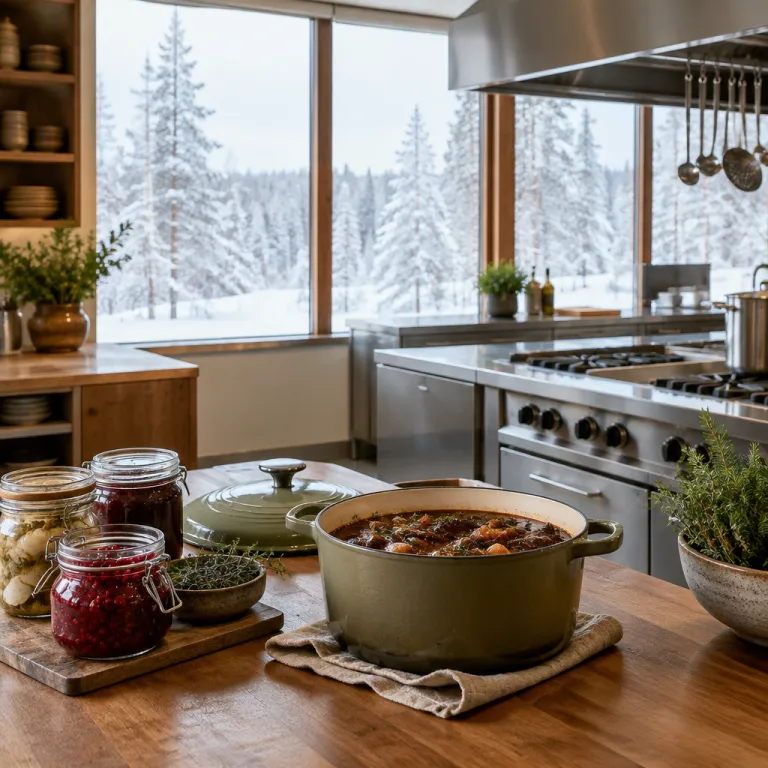
Reading a Finnish hotel winter cuisine game menu in the dark season
The best Finnish hotel winter menus built around game start with restraint. A serious hotel in Finland will show you, line by line, how its kitchen treats the long dark as a season for precision rather than excess. When you sit down in a quiet downtown dining room and feel the snow pressing against the windows, that is when you see whether the chef understands winter or only decorates it with ice.
Look first at how the hotel names its ingredients and producers. In Helsinki or a compact property in downtown Tampere, a confident team will write “wild mallard from western Finnish Lapland, lingonberries from a nearby village, barley from a specific farm” instead of vague “local game” or “seasonal berries” that could come from kilometers or miles away. Here the idea of Finnish hotel winter cuisine becomes a lens for judging whether the plate reflects a real landscape or just a themed fantasy.
Menus that take winter seriously lean on game, roots and preserves but avoid repeating the same gestures. You might see slow roasted elk with fermented turnip, or Arctic char cooked over birch with a sauce built from dried mushrooms gathered when the forest was still green. When a hotel writes clearly about preservation, it signals that the kitchen has planned for the months when visitors walk through snow instead of forests, and that the chef has thought about how to carry summer brightness into the long polar night.
The winter pantry: preserves, game and the real work behind the plate
Once the first hard ice forms on the lakes, the serious work of a Finnish winter pantry becomes visible. In the north of Finland and especially in Finnish Lapland, hotel kitchens that matter have already spent months curing, fermenting and smoking, building a reserve that will carry them through when the ground is locked and the forest is silent. This is where a focused winter game menu separates itself from a generic international hotel buffet.
Think of the cellar as the hidden dining room inside the hotel, a place where jars of pickled chanterelles, fermented cabbage and preserved berries line the walls. In Kittilä, Finnish chefs working in remote Lapland hotels often talk about counting every kilogram of berries and every cut of game, because Kittilä kilometers are not the same as city blocks and resupply can mean hours across miles of arctic road. Local restaurateur Aku Palmroos notes that a typical delivery run for one hotel Kittilä property can cover more than 150 kilometers, miles that force the kitchen to treat every jar as part of a long winter plan rather than a decorative extra.
For the business leisure traveler, this pantry is not a romantic detail but a measure of competence. A hotel that can articulate how it uses game, roots and preserves is usually a hotel that has thought about everything from breakfast coffee to late check out with the same care. When you choose properties from a curated platform, you are effectively choosing between hotels where the winter pantry is a living system and hotels where winter is just a themed word on the website.
From Helsinki to Lapland: where hotel dining leads, not follows, the stay
Helsinki’s best hotel restaurants now operate with the confidence of standalone fine dining rooms. The city’s top Nordic kitchens have been recognised by guides such as the Michelin Guide and Falstaff’s Nordic rankings, and their philosophy has filtered into the way ambitious hotels across Finland think about winter. When you book a room in the capital, the real question is whether the restaurant downstairs can hold your attention as strongly as the design of the lobby or the view from the sauna.
In practice, that means a Finnish hotel winter game menu that changes as the temperature drops, not a static “seasonal” card that looks the same in August and January. You want to see game from specific regions, fish named by species and catch method, and vegetables that reflect the short Finnish growing season rather than a global supply chain. In recent years, downtown Helsinki hotels such as Hotel St. George and Lapland Hotels Bulevardi have shown how a winter card can move from early root vegetables in October to deeper, game-heavy menus by late January without losing clarity or local focus.
Outside Helsinki, the Turku–Helsinki corridor has become a quiet testing ground for hotel dining that rivals destination restaurants. When you plan a drive or rail trip between the two cities, it is worth structuring your itinerary around a dinner that justifies the stop rather than treating the hotel as a simple bed. Properties along this route increasingly use winter menus to showcase coastal fish, preserved apples and archipelago lamb, turning what used to be anonymous Sunday nights in transit into meals that feel as deliberate as the main destination.
Lapland hotels, snow villages and the lure of themed ice dining
Far above the Arctic Circle, Lapland hotels have learned that winter dining must compete with the spectacle outside. Guests arrive for the snow, the silence and the northern lights, but they remember the meals that warm them after a long walk inside the forest or a late night on a frozen lake. In this context, a Finnish Lapland hotel game menu is not a niche idea but the backbone of the stay.
In Kittilä, Finnish Lapland has turned the concept of an ice hotel and snow village into a full winter culture, complete with themed ice bars and sculpted corridors where visitors walk through carved scenes. Some properties lean into pop culture, offering thrones themed spaces that nod to the Game of Thrones series and its fans, sometimes in collaboration with HBO Nordic and other partners. The risk is that the spectacle of a Game of Thrones themed ice hall can overshadow the plate, turning dinner into a photo opportunity rather than a serious exploration of local game and preserved produce.
The most interesting Lapland Sunday dinners in these environments do something different. They use the drama of the ice hotel architecture and the snow village setting as a frame, then serve quietly confident plates of reindeer, grouse or Arctic char that speak of miles of arctic landscape rather than of any television series. When you evaluate such hotels, ask whether the inside game of the kitchen matches the theatrics outside, and whether the chef can talk as fluently about local producers as the marketing team talks about thrones, HBO or any themed experience.
How to test a winter kitchen: questions, signals and quiet authority
For an executive extending a work trip into leisure, time is the rarest ingredient. You may only have one Lapland Sunday dinner or a single night in a downtown Helsinki hotel to judge whether the kitchen is worth rearranging meetings for. That is why the structure of the winter game menu becomes your most efficient filter.
Start by asking simple, direct questions when you book or check in. Does the hotel Kittilä property you are considering change its menu between early and late winter, or is the same card offered from early January through late spring? In a serious house, the staff will be able to explain how the menu shifts as the snow deepens, how many kilometers or miles the game travels, and which dishes rely on preserves from the previous summer rather than imported produce.
Then, once you sit down, read the menu as a map of Finland rather than a list of dishes. Look for references to specific regions such as Kittilä, Finnish Lapland or the coastal archipelago, and notice whether the hotel names its hunters, fishers and farmers. When a property can talk clearly about how far its ingredients travel in Kittilä kilometers, and when the chef is more interested in the quiet craft of preservation than in themed theatrics, you have likely found a kitchen where winter is not a constraint but a language.
Where game meets place: reindeer, responsibility and the taste of winter
Game is the most direct way to taste a Finnish winter on a plate. Reindeer, elk, grouse and hare all carry the flavour of the landscapes they move through, from sparse pine forests to open fells and coastal marshes. A thoughtful Finnish hotel winter game menu treats these animals not as trophies but as ambassadors of specific ecosystems.
In Lapland, that means working closely with Sámi herding communities and local hunters, and understanding that responsible sourcing is as important as technical cooking. Detailed reporting on responsible Sámi reindeer encounters in winter outlines the questions you should ask hotels about their suppliers and animal welfare. When a property can explain how its reindeer stew connects to specific herding cooperatives, or how its smoked elk reflects a particular forest, you are tasting a place rather than a generic Nordic idea.
For the traveler, this link between plate and place becomes a way to navigate the country. A downtown Helsinki hotel might serve a refined take on grouse with fermented beetroot, while a remote Lapland lodge offers a more rustic reindeer dish built on the same preservation logic. In both cases, the most compelling winter menus are those where game, preserves and the long dark form a coherent story, one that begins in the forest and ends quietly, late at night, in the dining room.
FAQ: Finnish hotel winter cuisine and game
How can I tell if a Finnish hotel takes winter cooking seriously?
Look for menus that change with the season, name specific producers and highlight preserved ingredients such as fermented vegetables, dried mushrooms and cured fish or game. Staff should be able to explain how the kitchen uses summer and autumn produce to build a winter pantry. If the menu looks identical year round and relies heavily on imported items, the kitchen is likely treating winter as decoration rather than a discipline.
Is game always the best choice on a Finnish winter menu?
Game is often the clearest expression of Finnish winter, but it is not the only one. Well handled root vegetables, preserved berries and freshwater fish can be just as revealing of a region and a chef’s skill. The key is whether the dish reflects a specific place and season, not whether it contains meat from wild animals.
Are themed ice hotels and snow villages good for serious dining?
Themed ice hotels and snow villages in Lapland can offer memorable settings, but the quality of the food varies widely. Some properties focus on spectacle, while others use the dramatic architecture as a backdrop for thoughtful, locally sourced menus. Always ask about sourcing, preservation and how often the menu changes before assuming that a striking dining room guarantees a strong kitchen.
What should business travelers prioritise when choosing a hotel for winter dining?
Business travelers with limited time should prioritise hotels where the restaurant is treated as a core part of the experience, not an afterthought. Signs include a dedicated head chef, clear information about producers, and menus that highlight winter techniques such as smoking, fermenting and curing. Reading recent, independent reviews focused on dining rather than only on rooms can also help you avoid properties where the kitchen lags behind the rest of the operation.
Do I need to book winter restaurant experiences in Finnish hotels in advance?
In peak winter months, many of the most interesting hotel restaurants in Finland operate with limited seating and fixed menus. Booking in advance is strongly recommended, especially for tasting menus or special game focused dinners. If you are staying in a remote Lapland property, advance reservations also help the kitchen plan its use of preserved ingredients and game more efficiently.