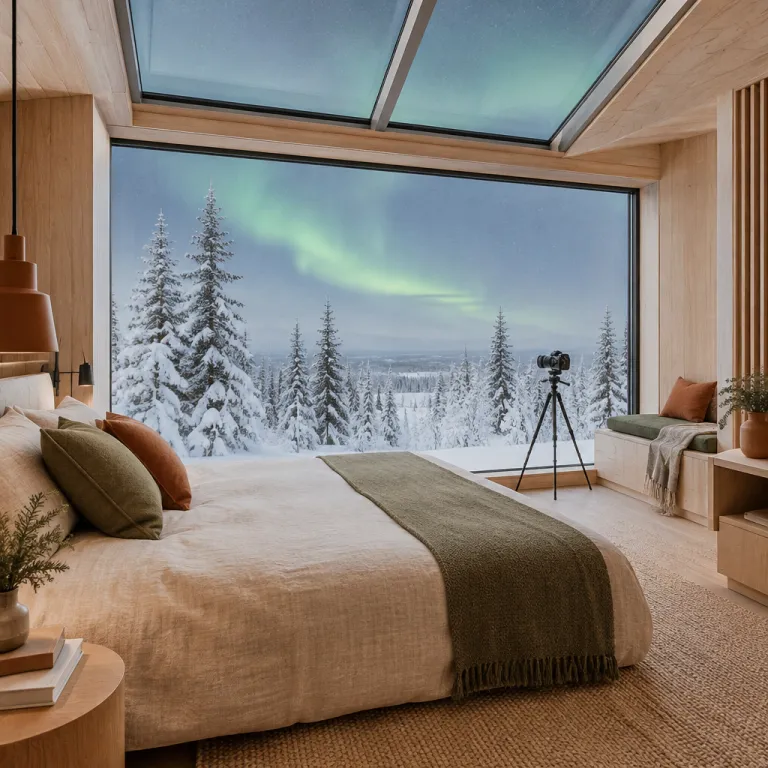
What makes an aurora glass room in Finland work for photography
For serious aurora glass room Finland photography, the architecture matters more than the marketing. A room that is genuinely engineered for the aurora borealis will prioritise a clear northern sky, minimal internal reflections and a stable, dark foreground that lets your camera read the lights properly. If you care about the shot as much as the spectacle, you need to evaluate every glass surface with the same attention you give to your lens.
Start with orientation because the best properties in Lapland Finland quietly align their glass roofs and window walls toward the northern horizon where the aurora most often arcs. A true glass igloo or lakeside suite should give you an unobstructed view from low on the horizon to directly overhead, with no trees, chimneys or neighbouring igloos cutting through your frame. When a hotel only shows close cropped interior photos of its glass igloos, explore the gallery with slow swipe gestures on your touch device and ask for an exterior plan or map before you select your room type. A simple sketch that marks each igloo hotel dome, nearby trees and the direction of north will tell you more about potential northern lights compositions than any single hero shot.
Thermal glass is the next non negotiable for any igloo aurora stay that involves long exposures. High quality heated glazing sheds frost and snow so your camera can keep working while you remain under the duvet, and it also reduces the internal condensation that ruins northern lights reflections. Operators such as Wilderness Hotels have invested in thermal glass roofs specifically so guests can lie in bed and review their images between bursts of activity without stepping into the cold.
Beyond the igloo cliché: cabins, suites and sky rooms that actually deliver
The classic igloo hotel dome still dominates brochures, yet many of the best aurora glass room Finland photography stays are now cabins and suites. Heated timber structures with one or two glass walls often perform better than full glass igloos because they control stray light and give you a clean horizon line. When you compare options, look for properties that talk about window orientation and light management rather than only repeating northern lights superlatives.
Gáldu Hotel & Spa, for example, has Stellar Haven and Signature Suites that angle their glazing toward the darker northern sky, pairing spa level comfort with serious sky framing. Kuuru Lakeside in Salla positions its glass fronted suites by Lake Keselmäjärvi, where the water and low shoreline create a calm foreground that anchors your aurora borealis images. These are not sold as gimmicks but as rooms where users explore the night slowly, adjusting camera settings while the lake stays still and the sky moves.
When you research Lapland Finland retreats, read long form pieces on Sami partnerships and design, such as this guide to Lapland hotels working with Sámi communities, because they often reveal which properties respect their location enough to manage light pollution. A hotel that keeps exterior lighting low for cultural and environmental reasons usually creates better conditions for northern lights photography from bed. That same restraint tends to show up in room layouts, where glass igloos or sky suites are spaced far enough apart that no neighbour’s terrace light bleeds into your frame.
Light, darkness and the honest limits of aurora guarantees
Every serious photographer booking an aurora glass room in Finland needs to accept one hard truth. No matter how advanced the glass, how remote the igloos or how carefully you plan, the sky may stay stubbornly grey. According to the Finnish Meteorological Institute’s statistics on Lapland resorts, aurora availability on clear nights sits at around 50 percent, and the main aurora season runs from late August through April.
That is why the most trustworthy Lapland Finland properties avoid promising that you will see northern lights from your bed and instead talk about increasing your chances. They emphasise staying several nights, choosing locations between roughly 67 and 70 degrees north and checking both weather and aurora forecasts before you enter your card details. When a hotel implies nightly aurora borealis displays, treat that as a red flag and review how they handle guest expectations in their terms.
For solo travellers, the best strategy is to choose a quiet igloo aurora base and then build in flexibility to move outside when the sky demands it. Articles such as this report on Finland’s quietest Lapland hotels show how silence, darkness and low key service can support both rest and photography. A room that lets you shoot from bed is a luxury, but a property that respects darkness across the whole site is what really protects your images.
Design details that matter when you care about the shot
Once you have narrowed your search to serious aurora glass room Finland photography contenders, start interrogating the details. Ask how the interior lighting is controlled, whether you can switch off every source near the glass and if the bathroom door leaks light into the sleeping area. A room that looks warm and bright in marketing images may be impossible to darken enough for long exposures without reflections.
Look for blackout curtains or panels that can be drawn behind you, not across the glass, so your body and camera sit in a pool of darkness facing the northern lights. Check whether the bed is positioned to give you a straight sightline to the northern sky, or if you will need to move furniture to set up a tripod. Some of the better glass igloos and lakeside cabins now include a small, dimmable red light near the entrance so you can enter, select your gear and move around without contaminating your exposures.
Thermal comfort also shapes your images because shivering ruins sharpness long before ISO noise does. Heated floors and well insulated walls in igloos or cabins mean you can shoot longer sequences without rushing, especially during the coldest Lapland Finland nights. Wilderness Hotels and similar operators have learned that when guests stay genuinely warm, they spend more time watching and photographing the aurora borealis, which in turn drives better reviews and repeat stays.
How to vet a Lapland room online when you are booking from a touch device
Most readers of myfinlandstay.com now plan their Lapland Finland trips on a phone, which changes how you evaluate rooms. On a small touch device, it is easy to be seduced by a single dramatic image of an igloo aurora display and miss the layout that actually matters. You need to slow down, use deliberate touch swipe motions and interrogate every frame like you would a contact sheet.
When you browse a hotel gallery, use swipe gestures to move past the hero shot and into the ordinary angles that reveal the truth. Look for photos taken from the pillow line, not just from the foot of the bed, and check whether any lamps, televisions or structural beams reflect in the glass. Device users should also zoom in on exterior shots to see how close neighbouring glass igloos or cabins sit, because tight spacing often means stray light and compromised northern lights photography.
On many booking engines, arrows for review navigation and autocomplete suggestions in the search bar can distract you from the details that matter. Instead, use the filters to explore touch friendly maps, then enter dates and room types that specify a glass igloo, sky suite or lakefront cabin. Read every review carefully, paying attention when users explore issues like condensation on glass, frost build up or poor blackout control, because those comments usually come from guests who tried to shoot the aurora borealis and cared enough to report back.
Digital behaviour: using interface gestures to choose the right aurora room
Choosing the right aurora glass room in Finland is now as much about how you handle interfaces as how you handle a camera. On myfinlandstay.com, we see that users explore better options when they slow their gestures and treat the booking journey like a scouting mission. Every touch, swipe and tap becomes a way to test whether a property respects darkness, orientation and real northern lights conditions.
When you type into a search bar, use autocomplete suggestions to surface both igloo hotel stays and less obvious lakeside cabins that might suit aurora glass room Finland photography even better. Autocomplete arrows often reveal alternative Lapland Finland locations with lower light pollution, which can matter more than a famous name. Once you have a shortlist, use touch inputs to refine by room type, then select filters for glass igloos, sky suites or lakefront cabins with panoramic glazing.
As you move through galleries, practise intentional touch swipe motions rather than flicking past images, and use arrows in the review tools to compare similar rooms side by side. On each property page, read review sections where guests mention how easy it was to switch off lights, how clear the glass stayed and whether the northern sky felt truly dark. If you want a sense of how these choices play out beyond winter, read pieces such as this feature on late season stays on Lake Saimaa, which show how the same design logic that suits aurora borealis photography also creates calm, reflective spaces in other months.
FAQ
Do all glass rooms in Lapland guarantee a view of the northern lights
They do not, even when the marketing suggests otherwise. As the Finnish Meteorological Institute’s guidance makes clear, aurora presence depends on solar activity and clear skies, and no glass igloo or sky suite can change that. A well designed room in Lapland Finland increases your chances, but no hotel can control the sky.
Which months are best for booking an aurora focused glass room in Finland
The aurora season in Finland runs from late August through April, with the most reliable displays usually between September and March. During these months, nights are long enough in Lapland Finland for the aurora borealis to appear if solar activity cooperates. Booking several nights within this window gives you a better balance between cost, comfort and probability.
How warm are glass igloos and sky suites designed for aurora watching
Modern glass igloos, cabins and sky suites in Finland are fully heated and use thermal glazing to keep the interior comfortable. These rooms are designed so that the glass surfaces stay clear while the air remains warm, which reduces the sensation of cold near the windows. For photographers, this warmth is crucial because it allows longer sessions at the tripod without rushing.
Is a full glass igloo always better than a cabin with large windows
Not necessarily, especially for aurora glass room Finland photography. A well designed cabin with one or two north facing glass walls can control reflections and light spill better than a fully glazed igloo. Many serious photographers prefer cabins or suites with a clear view of the northern sky and good blackout options behind them.
How many nights should I stay in Lapland to improve my chances of photographing the aurora
Staying at least three nights in Lapland Finland significantly improves your odds of both clear skies and aurora activity. With aurora availability on clear nights at around fifty percent, multiple nights help smooth out that variability. A longer stay also lets you adapt to local conditions, scout foregrounds and refine your shooting technique from your room.
Sources
Finnish Meteorological Institute (aurora statistics, latitude guidance and seasonal information)
Visit Finland (seasonal aurora information and regional context)
Property information from Wilderness Hotels, Gáldu Hotel & Spa and Kuuru Lakeside, Salla